Steel Reinforcement work
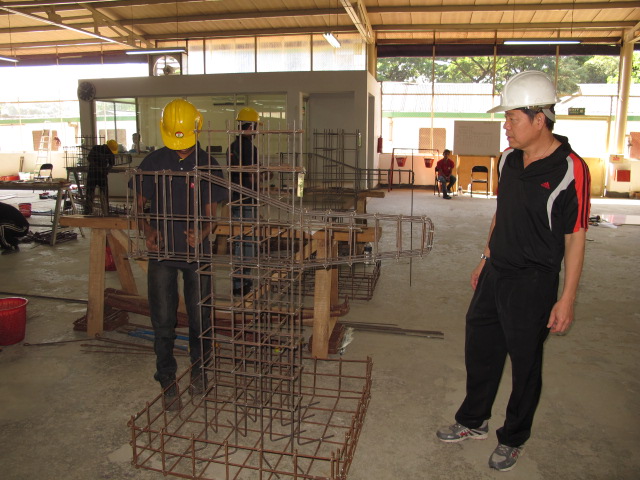
Steel Reinforcement Work refers to the process of placing and securing steel bars (also known as rebar) within concrete structures to enhance their strength, particularly in tension. This is a critical component of reinforced concrete construction used in buildings, bridges, foundations, and other infrastructure projects.
Here’s a structured overview of Steel Reinforcement Work:
🔧 1. Materials Used
Reinforcement Bars (Rebars):
Types: Mild steel bars, deformed bars (e.g., TMT, HYSD).
Common sizes: 6mm, 8mm, 10mm, 12mm, 16mm, 20mm, 25mm, etc.
Binding Wire:
Usually 16 to 18 gauge wire to tie bars together.
Chairs & Spacers:
Used to maintain cover and ensure proper spacing.
Cover Blocks:
Maintain concrete cover to prevent corrosion.
📐 2. Key Activities in Reinforcement Work
Bar Bending Schedule (BBS):
A detailed list showing the type, length, bend, and quantity of rebars.
Cutting and Bending:
Rebars are cut and bent to required shapes per BBS using cutting and bending machines.
Placing and Fixing:
Bars are placed in position as per structural drawings.
Proper spacing, overlaps (lapping), and anchorage are ensured.
Tying:
Bars are tied with binding wire at junctions for stability.
Providing Cover:
Cover blocks are placed to ensure adequate protection from environmental exposure.
🧪 3. Quality Checks
Bar Diameter and Grade Verification.
Rust or Oil-Free Surface.
Correct Bending and Placement per Drawings.
Adequate Lapping and Anchorage.
Clear Cover Verification.
Proper Tying and Stability.
🦺 4. Safety Measures
Use of gloves and eye protection.
Proper handling and storage to avoid injuries.
Ensure stable platforms/scaffolding during high-level work.
🏗️ 5. Common Applications
Columns
Beams
Slabs
Footings
Retaining Walls
Stairs
If you’re looking for:
A sample Bar Bending Schedule (BBS)
A checklist for site inspection
A method statement for steel reinforcement work
Details about laps, anchorage lengths, or cover requirements
PLEASE CONTACT US FOR FURTHER INFORMATION
SB Group
- Beroon, Jamgora, Ashulia, Dhaka, Bangladesh.
- Email: fondaglobaltestcenter@gmail.com
- Phone: +880255035512