FIRE SPRINKLER INSTALLATION (FSI)
Fire Sprinkler Installation Work Instruction
1. Purpose
To ensure the safe, proper, and compliant installation of fire sprinkler systems in accordance with relevant codes, standards, and manufacturer guidelines.
2. Scope
This instruction applies to all fire sprinkler installation work carried out on site.
3. Responsibilities
Installation Team: Follow these instructions and ensure quality workmanship.
Supervisor: Monitor compliance and safety.
Quality Control: Inspect and verify installation meets standards.
4. Tools and Materials
Sprinkler heads
Pipes (steel, CPVC, or copper as specified)
Fittings and couplings
Pipe hangers and supports
Pipe cutting and threading tools
Wrenches, pliers, screwdrivers
Pipe joint compound or thread sealant
Measuring tape and levels
Safety gear (helmet, gloves, safety glasses)
5. Safety Precautions
Wear personal protective equipment (PPE) at all times.
Ensure work area is safe and clear of hazards.
Follow lockout/tagout procedures if working with existing fire systems.
Handle tools and materials safely.
6. Procedure
Step 1: Review Plans and Specifications
Verify the installation drawings, hydraulic calculations, and specifications.
Confirm locations for sprinkler heads, pipe routing, and connections.
Step 2: Prepare the Site
Mark out sprinkler head positions on ceilings or walls.
Identify and clear pipe routing paths.
Confirm access points for installation.
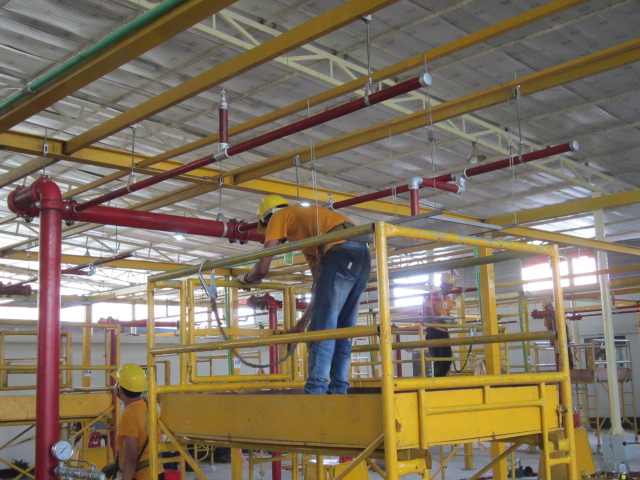
Step 3: Install Piping
Cut pipes to required lengths using pipe cutters.
Thread pipe ends if required.
Assemble pipe sections with appropriate fittings, applying thread sealant.
Secure pipes using hangers and supports at intervals per code.
Ensure pipes are level and aligned properly.
Step 4: Install Sprinkler Heads
Fit sprinkler heads to piping at designated locations.
Avoid overtightening sprinkler heads to prevent damage.
Protect sprinkler heads from paint, dust, or debris during construction.
Step 5: Pressure Test
Perform hydrostatic pressure test according to project specifications.
Check for leaks, tighten joints or replace defective parts if necessary.
Document test results.
Step 6: Final Inspection and Commissioning
Inspect entire installation for compliance with codes and manufacturer instructions.
Remove any protective caps or plugs from sprinkler heads.
Notify the relevant authority for system acceptance testing.
7. Documentation
Record installation progress and test results.
Maintain all certifications and inspection reports.
8. References
NFPA 13 – Standard for the Installation of Sprinkler Systems
Local building and fire codes
Manufacturer installation manuals
PLEASE CONTACT US FOR FURTHER INFORMATION
SB Group
- Beroon, Jamgora, Ashulia, Dhaka, Bangladesh.
- Email: fondaglobaltestcenter@gmail.com
- Phone: +880255035512